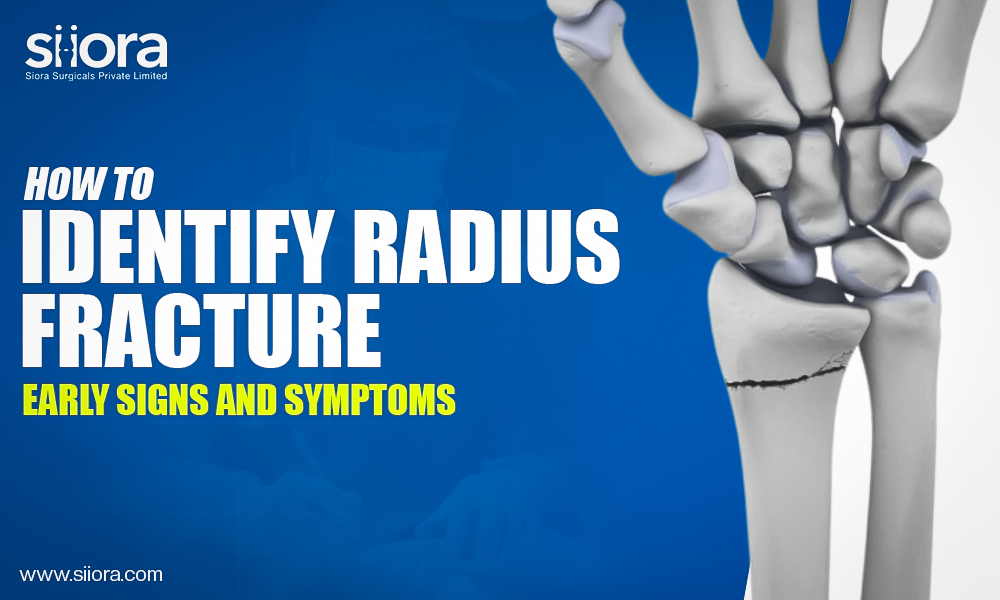
A radius fracture, which frequently happens close to the wrist end of the radius, is a break in one of the two major forearm bones. In more severe situations, doctors may employ a radius fracture plate to stabilize the bone and promote appropriate healing. Early detection and treatment are essential for a full recovery.
Knowing the common causes of a radius fracture and the warning signals your body may give you following an injury are the first steps in recognizing one. The most frequent causes of radius fractures are falls onto an outstretched hand, accidents, and sports injuries, especially in contact or high-impact sports.
Early Signs and Symptoms
After trauma to the wrist or forearm, several early signs and symptoms can indicate a radius fracture:
- Immediate, intense pain: This is usually the first and most prominent symptom following a radius fracture. The pain often worsens with any attempt to move the wrist, grip, or squeeze.
- Swelling: Rapid swelling at the site of injury is a classic sign. This may be accompanied by tenderness and, sometimes, the area may feel warm to the touch.
- Bruising: Moderate or severe bruising often develops within hours of the fracture, due to ruptured blood vessels in the region.
- Deformity: In many cases, the wrist or forearm may appear bent or misshaped. The “dinner fork deformity”, where the wrist has the appearance of an overturned fork, is a distinctive sign, especially in certain types of distal radius fractures like a Colles fracture.
- Reduced mobility: Difficulty moving the wrist, hand, or fingers is common. Some people experience numbness, tingling, or loss of function in the fingers or hand if nerves are affected.
- Gripping difficulties: Even simple movements, like gripping, turning the wrist, or picking up objects, can become extremely painful and sometimes impossible.
Differentiating Fractures from Sprains
Pain, swelling, and restricted movement are some of the signs of a wrist sprain that can occasionally be confused with those of a radius fracture. Fractures, on the other hand, usually result in more noticeable deformity, chronic pain that doesn’t go away with rest, and occasionally numbness because of nerve involvement. A fracture is more likely if there is a noticeable bend or bump that isn’t typically there or if you are in too much pain to use your hand or wrist normally.
When to Seek Medical Attention?
It’s critical to get medical help right away if you think you may have a radius fracture, especially if you have symptoms like severe pain, a noticeable deformity, numbness, or difficulty moving your fingers. Poor healing outcomes, like a reduction in grip strength and range of motion, can result from delayed diagnosis and treatment. Using an X-ray, a medical professional can confirm a radius fracture and decide on the best course of action, which may involve immobilization with a cast or, in more serious situations, surgical repair using hardware such as a radius fracture plate.
Other Important Considerations
- Fractures can result from seemingly minor falls, especially in older adults with osteoporosis. Women are at a slightly higher risk due to generally lower bone density.
- Symptoms may sometimes be subtle initially, so don’t ignore persistent pain or swelling.
- Early intervention ensures proper bone healing and prevents long-term disability.
Recognizing a radius fracture early allows for timely, effective care and safeguards long-term arm function. Always consult a medical professional if wrist or forearm injuries result in severe pain, swelling, deformity, or impaired movement.
Learn about the advancements in healthcare technology and explore cutting-edge tools and devices at the MEDICA 2025 in Germany, a premier healthcare event.
 Siora Surgicals Pvt. Ltd.